
Last updated: September 2026
- Quick Picks: Best GPS Tracker by Category
- Is It Legal to Put a GPS Tracker on a Car?
- How We Evaluated These GPS Trackers
- 13 Best GPS Trackers in 2026
- 1. LandAirSea 54: Best Overall
- 2. AngelSense: Best for Kids
- 3. Tractive GPS: Best for Dogs
- 4. Vyncs: Best No Monthly Fee Option
- 5. Garmin inReach Mini 2: Best for Off-Grid Use
- 6. Tracki Mini: Best Budget Pick
- 7. Apple AirTag: Best Bluetooth-Only Tracker
- 8. Tile Pro: Best Cross-Platform Bluetooth Tracker
- 9. Jiobit Smart Tag: Best Lightweight Tracker for Families
- 10. Samsung SmartTag 2: Best for Samsung Users
- 11. Spytec GL300: Best for Personal Safety Monitoring
- 12. Whistle Go Explore: Best Health-Tracking Pet Tracker
- 13. Cube GPS Tracker: Best for Global Multi-Country Coverage
- GPS Trackers With No Monthly Fee: What Are Your Real Options?
- What Is an OBD-II GPS Tracker, and Do You Need One?
- Key Features to Compare
- Installing and Maintaining a Hidden GPS Tracker
- Frequently Asked Questions
- What is the best GPS tracker overall in 2026?
- Can I use a GPS tracker without a subscription?
- Is it legal to track my own car?
- What’s the best GPS tracker for kids?
- How accurate are GPS trackers?
- How to Set Up Your GPS Tracker in 3 Steps
- The Bottom Line
A GPS tracker gives you real, verifiable location data. That beats guessing where your car, your dog, or your kid actually is.
We tested trackers across every major use case: cars, kids, dogs, hikers, and budget-conscious buyers who don’t want a monthly bill. Here’s what’s actually worth buying in 2026.
Quick Picks: Best GPS Tracker by Category
| Category | Top Pick | Monthly Fee? | Best For |
|---|---|---|---|
| Best Overall | LandAirSea 54 | Yes (~$25/mo or annual) | Vehicles and asset tracking |
| Best for Kids | AngelSense | Yes | Real-time location + two-way calls |
| Best for Dogs | Tractive GPS | Yes | Pet safety and activity tracking |
| Best No Monthly Fee | Vyncs | No (one-time cost) | Car owners who hate subscriptions |
| Best Off-Grid/Hiking | Garmin inReach Mini 2 | Yes (satellite plan) | Areas with no cell coverage |
| Best Budget Pick | Tracki Mini | Yes (low-cost) | Global coverage on a budget |
| Best Bluetooth-Only | Apple AirTag | No | Keys, bags, nearby items |
Is It Legal to Put a GPS Tracker on a Car?
It depends on who owns the car. Tracking a car you own outright is legal in nearly every state.
Tracking someone else’s car without their consent usually is not. That can lead to criminal charges or a civil lawsuit, depending on your state.
A few exceptions apply. Parents can typically track a minor child’s car, and employers can often track company-owned fleet vehicles, though many states require notifying the employee first. When in doubt, check your state’s laws or talk to a lawyer before installing a tracker on a shared vehicle.
How We Evaluated These GPS Trackers
We tested each device for signal accuracy, battery life, and how fast the app pushed real-time alerts. We also weighed subscription cost against what you actually get for it.
Extra features like geofencing, waterproofing, and magnetic mounts earned points, but only when they worked reliably in daily use, not just on the spec sheet.
13 Best GPS Trackers in 2026
1. LandAirSea 54: Best Overall
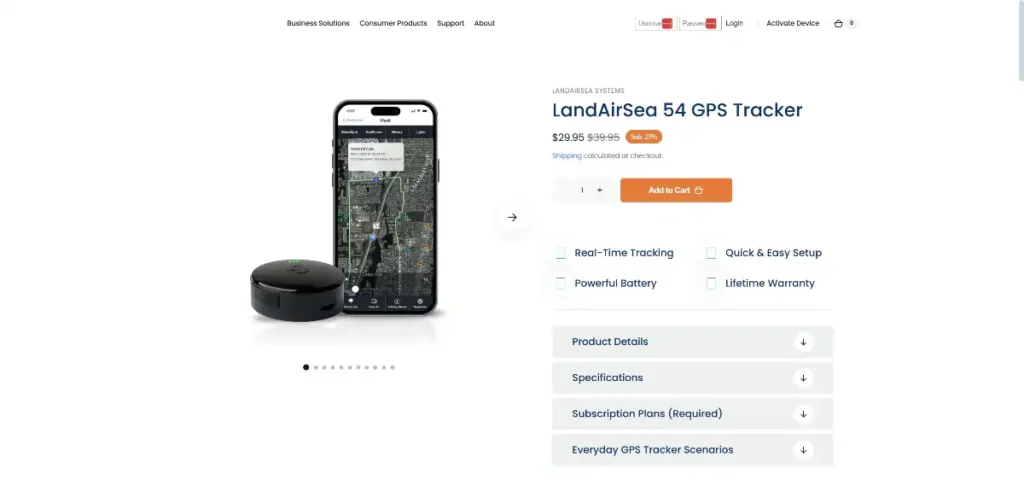
LandAirSea 54 is a professional-grade tracker built for vehicles and asset tracking. Its magnetic mount makes it easy to attach to any vehicle in seconds.
Location updates can refresh as often as every 3 seconds, faster than most competitors. The waterproof housing holds up well to outdoor mounting.
Pros: Accurate real-time updates, rugged design, easy mounting.
Cons: Requires a subscription, slightly bulky for very discreet placement.
2. AngelSense: Best for Kids
AngelSense is purpose-built for children, including kids with special needs. It combines real-time GPS tracking with two-way voice calling and instant SOS alerts.
Unlike general-purpose trackers repurposed for kids, AngelSense is designed around a child wearing it daily, with a tamper-resistant clip and a design that discourages removal.
Pros: Purpose-built for kids, live voice calls, strong parent support team.
Cons: Pricier subscription than general trackers, US-focused coverage.
3. Tractive GPS: Best for Dogs
Tractive remains the top dedicated dog tracker in 2026. It combines real-time location with activity and sleep tracking, so you can see more than just where your dog is.
The waterproof collar attachment survives rain, mud, and swimming without issue.
Pros: Built for pets specifically, activity tracking, geofencing alerts.
Cons: Subscription required for live tracking, battery needs charging every few days with heavy use.
4. Vyncs: Best No Monthly Fee Option
Vyncs plugs directly into your car’s OBD-II port and runs off the car’s own power, so there’s no battery to charge. After a one-time purchase, there’s no mandatory monthly fee for basic tracking.
Beyond location, it reports vehicle diagnostics, driving behavior, and trip history, useful if you’re monitoring a teen driver or a shared vehicle.
Pros: No monthly fee, vehicle health reports, constant power from the car.
Cons: Not portable between vehicles easily, requires an OBD-II port (most cars 1996+).
5. Garmin inReach Mini 2: Best for Off-Grid Use
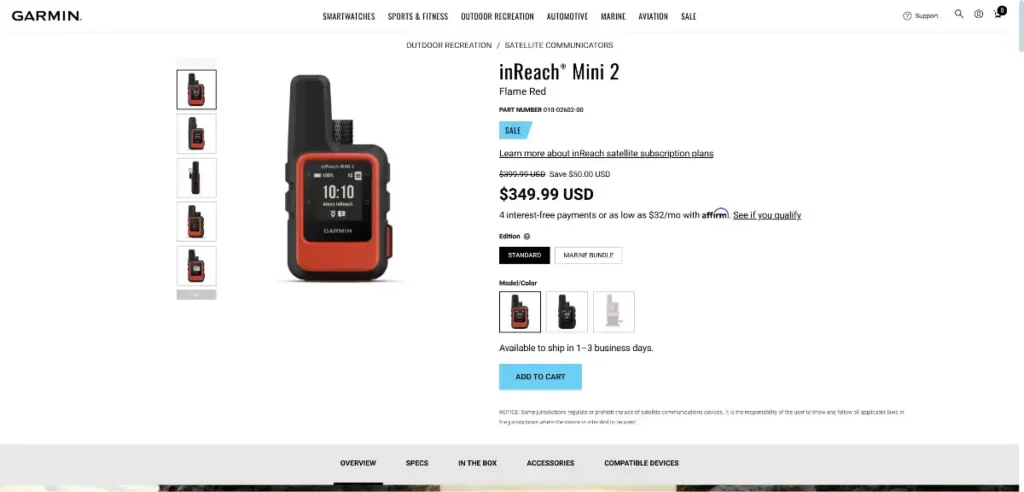
Garmin inReach Mini 2 uses the Iridium satellite network, so it works even where there’s zero cell signal. That makes it the top choice for hikers, campers, and remote travelers.
It supports two-way satellite messaging and an SOS button that connects to a 24/7 emergency response center.
Pros: Works anywhere on Earth, real emergency SOS, rugged build.
Cons: Satellite subscription plans cost more than cellular trackers, small screen.
6. Tracki Mini: Best Budget Pick
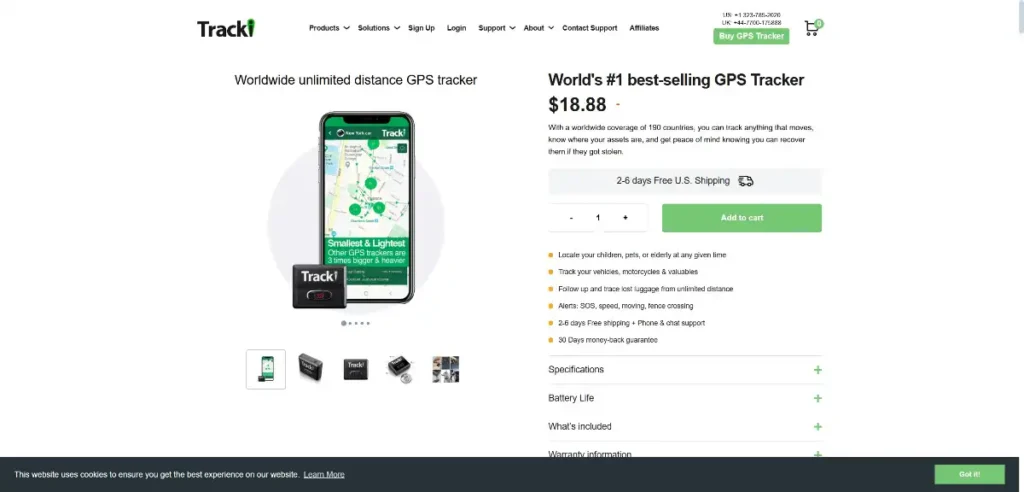
Tracki Mini covers GPS, 4G LTE, and Wi-Fi positioning in one small, affordable device. It works well for cars, pets, or personal safety on a tight budget.
Pros: Low price, works in over 100 countries, compact size.
Cons: Battery life drops fast without an external battery pack, subscription required.
7. Apple AirTag: Best Bluetooth-Only Tracker
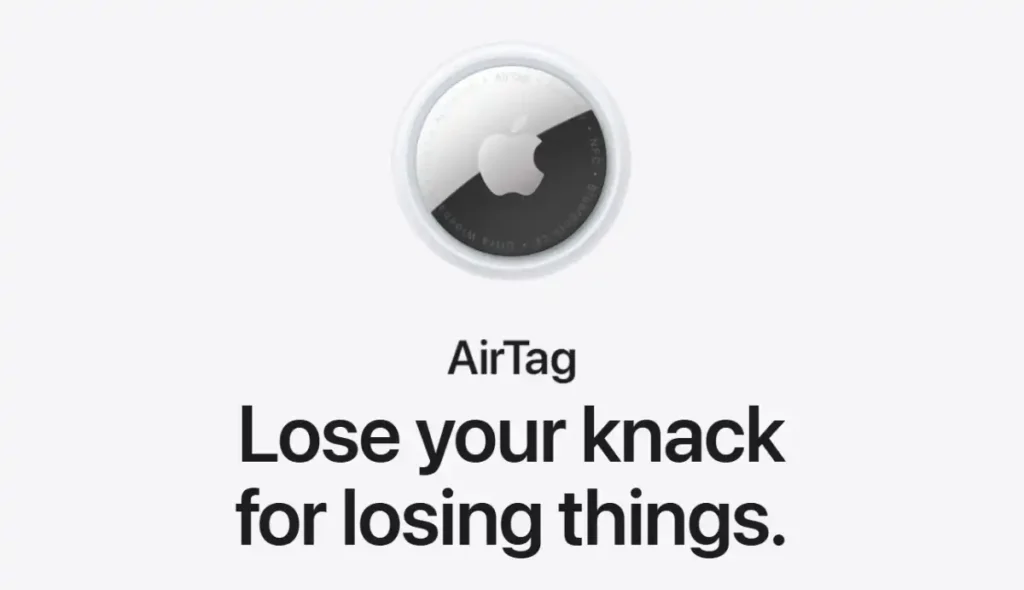
AirTag uses Apple’s massive Find My network instead of cellular data, so there’s no subscription at all. It’s ideal for keys, bags, or luggage, not for tracking a moving vehicle in real time.
Pros: No subscription, seamless iPhone integration, long battery life.
Cons: No Android support, weak for continuously moving objects like cars.
8. Tile Pro: Best Cross-Platform Bluetooth Tracker
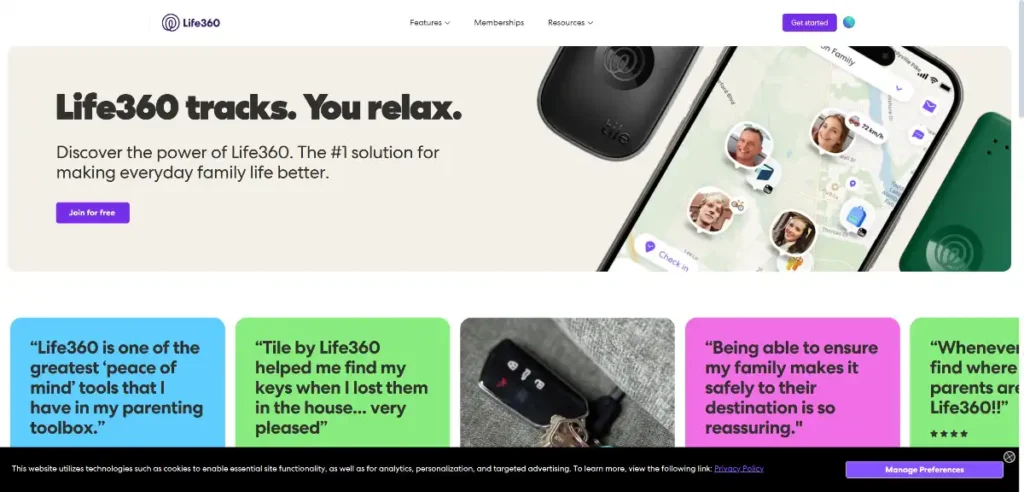
Tile Pro works with both Android and iOS, unlike AirTag. Its extended Bluetooth range and loud ringer make it fast to locate nearby lost items.
Pros: Works on Android and iOS, replaceable battery, large crowd-finding network.
Cons: Subscription needed for advanced features, short standalone range for live tracking.
9. Jiobit Smart Tag: Best Lightweight Tracker for Families
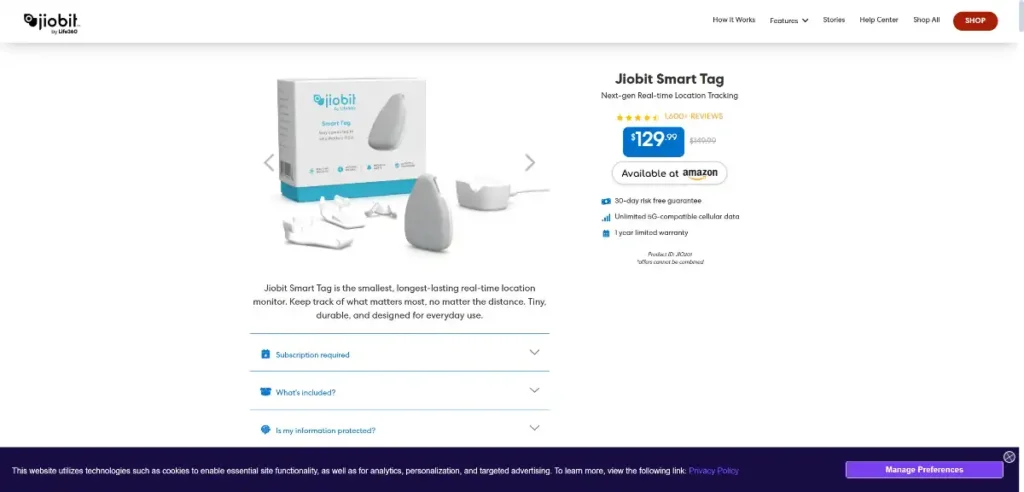
Jiobit is small and light enough for young kids or small pets, and it uses both GPS and cellular data for reliable coverage. The app includes safe-zone alerts and SOS notifications.
Pros: Accurate real-time GPS, small and lightweight, strong battery life.
Cons: Requires a subscription, higher cost than basic trackers.
10. Samsung SmartTag 2: Best for Samsung Users
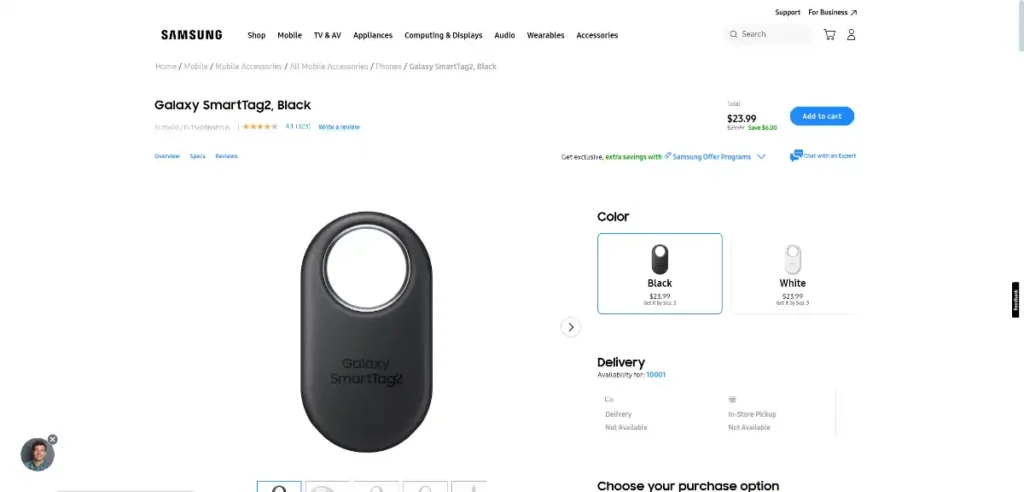
SmartTag 2 uses Bluetooth and UWB for high-precision tracking within Samsung’s SmartThings ecosystem. It’s the natural pick if you’re already on a Galaxy phone.
Pros: Long battery life, water-resistant, precise short-range finding.
Cons: Works best only within the Samsung ecosystem, limited range outside Bluetooth distance.
11. Spytec GL300: Best for Personal Safety Monitoring
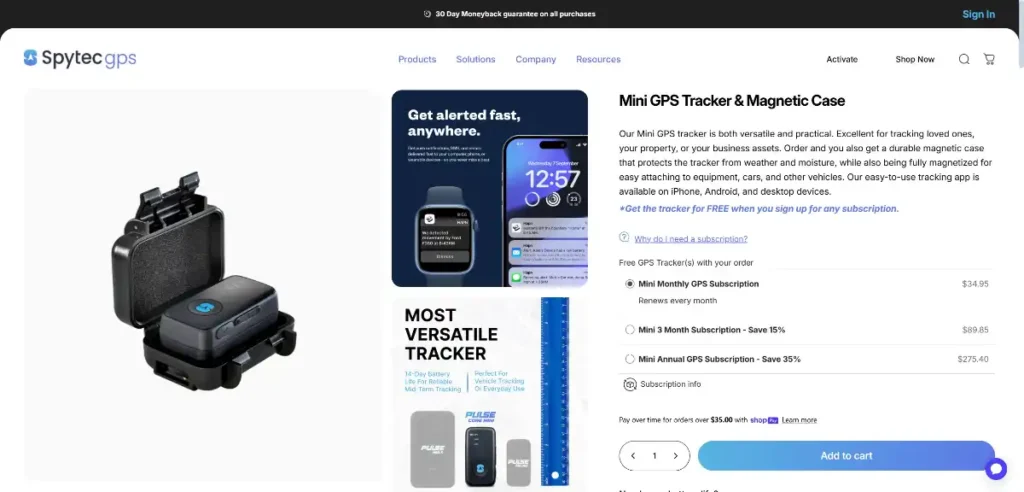
Spytec GL300 offers 4G LTE coverage across the US, Canada, and Mexico with fast, reliable location updates through an easy-to-use app.
Pros: Fast updates, long battery life, simple interface.
Cons: Requires a subscription, not waterproof.
12. Whistle Go Explore: Best Health-Tracking Pet Tracker
Whistle goes beyond location to monitor a pet’s activity, sleep, and behavior patterns, flagging changes that might signal a health issue.
Pros: Health and activity tracking, waterproof, real-time GPS.
Cons: Subscription required, bulkier fit for very small pets.
13. Cube GPS Tracker: Best for Global Multi-Country Coverage
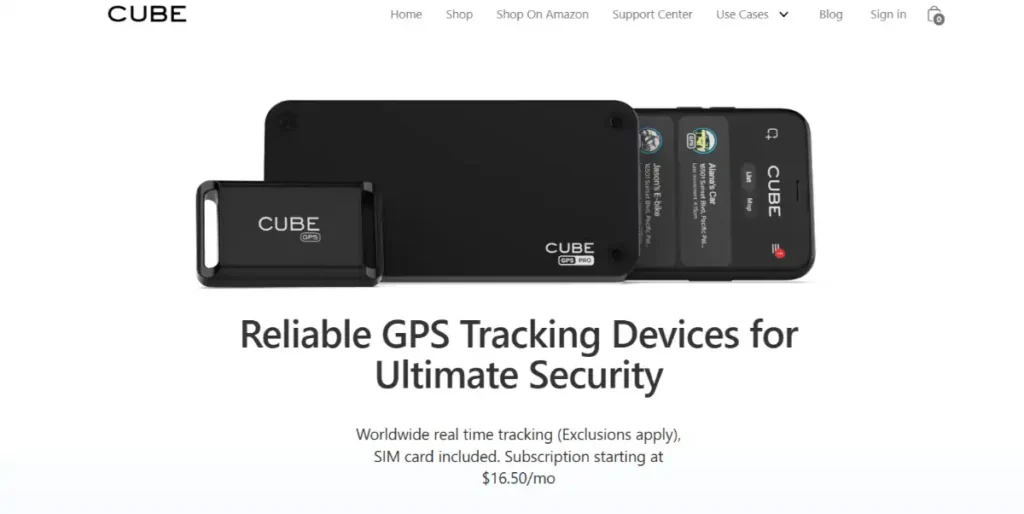
Cube includes a built-in SIM that works across multiple countries, with customizable alerts for speed, location, and geofence boundaries.
Pros: Global coverage, compact design, customizable alerts.
Cons: Subscription needed, average battery life.
GPS Trackers With No Monthly Fee: What Are Your Real Options?
Subscription-free tracking is a growing category in 2026, but it comes in two very different flavors.
Bluetooth-only trackers like AirTag and Tile need no subscription because they piggyback on a massive network of nearby phones. They’re excellent for stationary or slow-moving items, but they’re not built for tracking a moving car in real time.
OBD-II plug-in trackers like Vyncs take a different approach. They draw power directly from your vehicle and often include basic tracking with only a one-time hardware cost, though some advanced features still require a paid tier.
If your goal is finding lost keys or a parked car, a Bluetooth tracker saves you money. If you need continuous, real-time tracking of a moving vehicle, expect to pay a monthly or annual fee somewhere, even if it’s bundled into the hardware price.
What Is an OBD-II GPS Tracker, and Do You Need One?
Every car made after 1996 has an OBD-II port, usually located under the dashboard. Plug-in trackers like Vyncs use this port for both power and vehicle diagnostic data.
That means no battery to charge, ever. It also means the tracker only works while it’s plugged into that specific car, so it’s a poor fit if you need to move a tracker between vehicles or hide it discreetly.
Choose an OBD-II tracker if: you’re monitoring one vehicle long-term, want driving behavior reports, or want to avoid ever charging a battery.
Choose a portable/magnetic tracker instead if: you need to move the device between vehicles, or want a hidden, unpowered installation. If you’re specifically worried about vehicle theft, see our guide on finding a stolen car without a tracker already installed.
Key Features to Compare
- Real-time tracking speed: Look for update intervals under 30 seconds if you need to track a moving vehicle closely. Slower updates work fine for stationary asset tracking.
- Subscription cost: Compare the annual, not just monthly, price. Many trackers offer real savings for paying yearly instead of month to month.
- Geofencing: Set virtual boundaries and get an alert the moment your tracker crosses them. This matters most for teen drivers, kids, and pets.
- Battery life: Ranges from a few days on high-frequency trackers to a full year on low-power asset trackers. Match this to how often you’re willing to recharge.
- Waterproofing: A must for anything mounted outside a vehicle or worn by a dog.
Installing and Maintaining a Hidden GPS Tracker
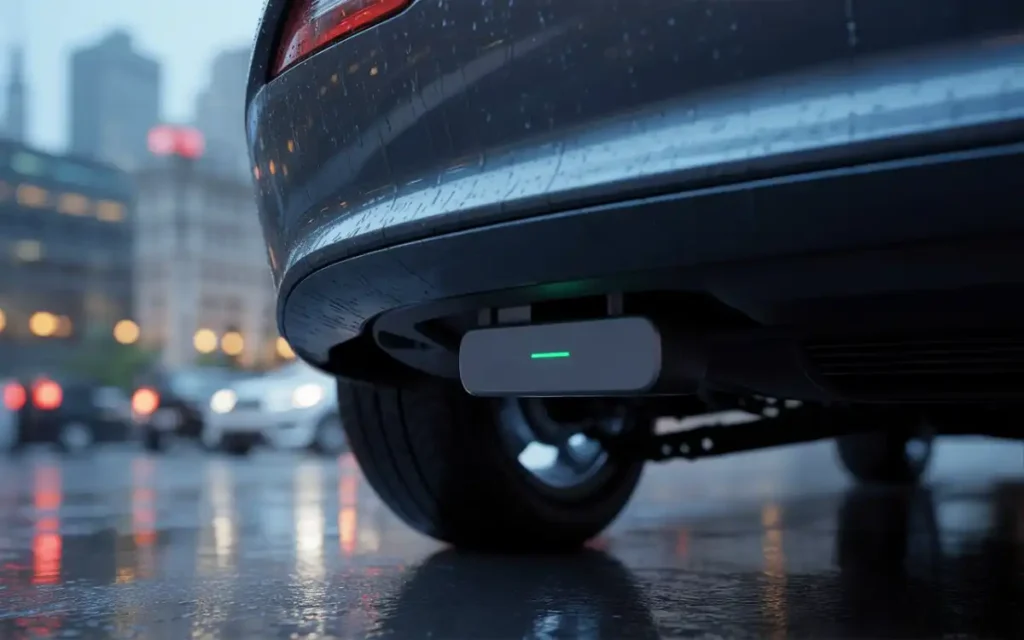
Mount a hidden car tracker somewhere it gets a clear view of the sky, like under a seat, inside a bumper, or in a wheel well with a magnetic case. Avoid metal enclosures that can block the GPS signal entirely.
A few maintenance basics keep any tracker reliable:
- Check the battery level in the app every few weeks.
- Keep the device clean and free of dirt or debris that can block sensors.
- Confirm your subscription is active before you actually need the data.
- Test the alert and geofencing features right after setup, not after something goes wrong.
If you’re setting up tracking for the whole family, pair a GPS tracker with a broader parental control app or a few nanny cams for complete coverage at home and on the road.
Frequently Asked Questions
What is the best GPS tracker overall in 2026?
LandAirSea 54 is the best all-around pick for vehicle and asset tracking, thanks to its fast update speed and rugged, magnetic-mount design.
Can I use a GPS tracker without a subscription?
Yes, but with trade-offs. Bluetooth trackers like AirTag need no subscription but only work well for stationary items. OBD-II trackers like Vyncs avoid recurring fees for basic tracking by drawing power from your car.
Is it legal to track my own car?
Yes. Tracking a vehicle you own is legal in nearly every state. Tracking someone else’s vehicle without consent is not, and can carry criminal or civil penalties.
What’s the best GPS tracker for kids?
AngelSense is the strongest option for kids, with real-time tracking, two-way voice calling, and a tamper-resistant design built specifically for children.
How accurate are GPS trackers?
Most modern GPS trackers are accurate to within 10-15 feet under clear sky conditions. Accuracy drops indoors or in dense urban areas with tall buildings.
How to Set Up Your GPS Tracker in 3 Steps
- Charge it fully before first use. Most trackers ship at partial battery, and a full first charge gives you an accurate read on real battery life.
- Activate the subscription and set your first geofence. Do this indoors, at home, so you can confirm alerts fire correctly before you actually need them.
- Test it on a short trip before relying on it. Drive, walk, or send it a short distance away and confirm the app updates in real time before you count on it for something important.
The Bottom Line
For most people tracking a vehicle, LandAirSea 54 is the safest default pick. If you want to avoid a monthly fee entirely, Vyncs is the strongest option for car owners willing to use their OBD-II port.
For kids, AngelSense remains the most purpose-built choice. For dogs, Tractive still leads the pack. Match the tracker to your actual use case rather than chasing a single “best” device, since the right choice depends heavily on what you’re tracking and how often.