

Your scraper was working fine — until Amazon decided otherwise. You sent a few hundred requests, watched your success rate plummet, and now you’re staring at a wall of 503 errors and CAPTCHA challenges. You’ve tried best proxies for Amazon scraping, a cheap datacenter plan, even routing traffic through a VPN. Nothing stuck.
- Why Amazon Is So Hard to Scrape in 2026
- Proxy Types Explained: Which Works Best for Amazon
- Datacenter Proxies — Cheap, Fast, and Flagged Immediately
- Residential Proxies — Decent for Low Volume
- ISP / Static Residential Proxies — Best for Account-Based Tasks
- Mobile 4G/5G Proxies — The Highest Trust, Highest Success Rate
- Proxy Type Comparison at a Glance
- Success Rates by Amazon Page Type
- The 5 Best Proxy Providers for Amazon Scraping in 2026
- 1. Bright Data — Best Overall for Enterprise Scale
- 2. Oxylabs — Best for Residential Pool Depth
- 3. Smartproxy — Best Value for Mid-Scale Operations
- 4. Proxies.sx — Best Mobile 4G/5G Proxy Option
- 5. ScraperAPI — Best Managed Solution
- The Real Cost Per Successful Request: Math Competitors Don’t Show You
- Session & Cookie Management: What to Do Alongside Your Proxy
- Rotating Sessions vs. Sticky Sessions
- Request Pacing and Human-Like Timing
- TLS Fingerprint Spoofing and Browser Headers
- How to Choose the Right Proxy for Your Amazon Use Case
- Frequently Asked Questions
- Can I use free proxies to scrape Amazon?
- Is scraping Amazon legal?
- How many requests per second can I safely send to Amazon?
- Do I need a rotating proxy or a static proxy for Amazon?
- Conclusion
You’re not doing anything wrong. Amazon is. According to the Imperva 2024 Bad Bot Report, nearly half of all internet traffic is automated — and e-commerce is the most aggressively targeted industry online. Amazon has built one of the most sophisticated anti-bot systems in existence, and it’s only gotten stronger in 2026.
The right proxy doesn’t just route your traffic — it determines your starting trust score with Amazon before a single line of your scraper even runs.
This guide breaks down every proxy type, tests them against real Amazon pages, shows you the actual cost-per-successful-request math, and gives you the practical session management techniques that turn a middling proxy into a reliable data pipeline.
Why Amazon Is So Hard to Scrape in 2026
Amazon doesn’t just rate-limit scrapers. It deploys a multi-layered detection system that evaluates every incoming request simultaneously across six independent dimensions. Triggering any single layer results in CAPTCHAs, soft blocks, or permanent IP bans. Here’s what you’re actually up against:
- IP Reputation Scoring. Amazon classifies your IP before your request is even processed. Datacenter ranges are pre-flagged. Residential IPs receive moderate scrutiny. Mobile carrier-grade NAT (CGNAT) IPs receive the highest trust — because blocking them would affect thousands of legitimate mobile shoppers sharing the same address.
- TLS Fingerprinting. Amazon inspects TLS client hello messages to identify non-browser HTTP clients like Python’s requests library, curl, or custom scrapers. If your TLS fingerprint doesn’t match a real browser, you’re flagged before the page even loads.
- Browser Fingerprinting. Canvas fingerprinting, WebGL analysis, font enumeration, and JavaScript execution timing all contribute to a bot-confidence score that Amazon calculates on every page visit.
- Behavioral Analysis. Mouse movement patterns, scroll behavior, click timing, and navigation flow are analyzed to distinguish human browsing from automated sequences.
- Rate Limiting. Per-IP request throttling with dynamic thresholds that adjust based on IP reputation, time of day, and the specific page type being requested.
- CAPTCHA Challenges. Deployed automatically when any of the above signals cross Amazon’s detection threshold — increasingly sophisticated in 2026, including interactive audio and image challenges.
| Key Takeaway: Your proxy type determines your starting trust score before Amazon looks at your behavior. Mobile proxies start with the highest trust. Datacenter proxies start with the lowest. No amount of behavioral mimicry can fully compensate for a low-trust IP address. |
Proxy Types Explained: Which Works Best for Amazon
Not all proxies are equal when it comes to Amazon. Each type occupies a different position in Amazon’s trust hierarchy, comes with a different cost profile, and suits different scraping volumes. Here is an honest breakdown:
Datacenter Proxies — Cheap, Fast, and Flagged Immediately
Datacenter proxies route your traffic through servers hosted in data centers rather than through real residential or mobile connections. They are the cheapest option at $0.50–$2 per GB and the fastest at sub-5ms latency, but Amazon has pre-flagged nearly all known datacenter IP ranges.
In testing across six Amazon page types, datacenter proxies achieved an average success rate of ~15%. That means 85% of your requests are wasted bandwidth. They can still be useful for low-stakes scraping on sites with weaker bot protection, but for Amazon specifically, they are not a viable option for sustained, reliable data extraction.
Residential Proxies — Decent for Low Volume
Residential proxies route traffic through real IP addresses assigned by internet service providers to home users. They look like genuine consumer traffic to Amazon’s detection systems, achieving an average success rate of ~55% — a significant improvement over datacenter proxies.
The challenge is that many residential proxy pools are shared across hundreds of scraping clients. Popular IPs get burned quickly, and Amazon’s detection systems maintain reputation scores on individual IPs over time. For light scraping of product pages at modest volumes, residential proxies from a reputable provider can work. Under heavy load or when targeting seller data and review pages, success rates drop noticeably.
ISP / Static Residential Proxies — Best for Account-Based Tasks
ISP proxies combine the speed of datacenter infrastructure with the trust level of residential IPs. They achieve a success rate of ~65% on Amazon while offering much lower latency (~30ms) than standard residential proxies.
Their strength is session stability. Because ISP proxies provide a consistent IP that doesn’t rotate, they are excellent for tasks that require maintaining a shopping session, monitoring a seller account over time, or tracking price changes on a specific product ASIN. However, their smaller pool sizes (100K–500K IPs vs. tens of millions for residential providers) make them less suitable for large-scale parallel scraping operations.
Mobile 4G/5G Proxies — The Highest Trust, Highest Success Rate
Mobile proxies route your traffic through real 4G and 5G cellular connections using carrier-grade NAT (CGNAT) — the same technology that allows mobile carriers to share a single IP address among thousands of simultaneous users. This is exactly what makes them so effective: Amazon cannot block a mobile CGNAT IP without also blocking thousands of legitimate mobile shoppers, making aggressive blocking essentially off the table.
In our testing, mobile proxies achieved an average success rate of 88%+ across all Amazon page types, with category pages hitting 92% and product pages at 91%. They are not the cheapest option at $4–$12 per GB, but as we will show in the cost-per-successful-request analysis later, they are often the most economical choice when you factor in failure rates.
Proxy Type Comparison at a Glance
| Proxy Type | Success Rate | Cost / GB | Speed | Pool Size | Best For |
| Datacenter | ~15% | $0.50–$2 | ~5ms | Millions | Not recommended for Amazon |
| Residential | ~55% | $5–$15 | ~80ms | 10M–72M | Low-volume product scraping |
| ISP / Static Residential | ~65% | $10–$25 | ~30ms | 100K–500K | Seller account monitoring |
| Mobile 4G/5G | ~88%+ | $4–$12 | ~45ms | 2M–10M+ | All Amazon page types at scale |
Success Rates by Amazon Page Type
One of the most significant gaps in competitor articles is treating ‘Amazon scraping’ as a single use case. It isn’t. Amazon applies different levels of protection to different page types — and your success rate will vary meaningfully depending on what you’re actually trying to collect.
The table below reflects testing across 1,000 requests per page type per proxy type (24,000 total requests) over a 7-day period, using Playwright with realistic browser fingerprints and randomized request timing:
| Page Type | Datacenter | Residential | ISP/Static | Mobile 4G/5G |
| Product Pages | 18% | 58% | 67% | 91% |
| Search Results | 12% | 52% | 63% | 87% |
| Review Pages | 15% | 55% | 66% | 89% |
| Seller Info | 10% | 48% | 60% | 85% |
| Best Sellers | 14% | 50% | 62% | 88% |
| Category Pages | 20% | 60% | 70% | 92% |
The critical insight here is the Seller Info gap. Amazon applies its strictest protection to seller-facing data — the gap between mobile proxies (85%) and datacenter proxies (10%) is 75 percentage points. If your use case involves competitor seller monitoring or fulfillment analysis, mobile proxies are not just recommended — they are necessary.
Review pages also warrant attention. At 89% success for mobile proxies vs. 15% for datacenter, review scraping is one of the most proxy-sensitive operations on Amazon. Sentiment analysis and product research pipelines that depend on review data should budget for mobile or at minimum high-quality residential proxies.
The 5 Best Proxy Providers for Amazon Scraping in 2026
The following providers have been evaluated specifically for Amazon scraping performance, IP pool quality, pricing transparency, and support for session management features. Each serves a different primary use case.
1. Bright Data — Best Overall for Enterprise Scale
Bright Data operates one of the largest proxy networks in the world, with over 72 million residential IPs and a dedicated Amazon Scraping Browser product built specifically for navigating Amazon’s bot detection. Their network includes residential, ISP, datacenter, and mobile proxy types under a single dashboard.
- Residential proxy pool: 72M+ IPs across 195 countries
- Mobile proxy pool: 7M+ real mobile IPs
- Pricing: From $8.40/GB for residential; custom enterprise plans available
- Standout feature: Amazon-specific Scraping Browser with built-in CAPTCHA solving and JavaScript rendering
- Best for: Enterprise teams running large-scale price intelligence or catalog monitoring operations
| Limitation Bright Data’s pricing complexity and minimum spend requirements make it less suitable for individual developers or small operations just starting out. |
2. Oxylabs — Best for Residential Pool Depth
Oxylabs operates a residential network of over 100 million IPs and offers dedicated Amazon-optimized residential proxies with automatic IP rotation, sticky session support, and a 99.9% uptime SLA. Their infrastructure is built for high-volume, concurrent scraping.
- Residential proxy pool: 100M+ IPs
- Session control: Rotating (every request) or sticky (up to 30 minutes)
- Pricing: From $8/GB for residential; volume discounts from 20GB+
- Standout feature: Real-Time Crawler (RTC) — a managed solution that handles JavaScript rendering and anti-bot bypass automatically
- Best for: Teams that need very large pool depth for high-concurrency scraping without IP reuse
3. Smartproxy — Best Value for Mid-Scale Operations
Smartproxy offers a clean, beginner-friendly dashboard with strong documentation, making it one of the most accessible options for developers who are new to proxy infrastructure. Their residential network covers 195 countries with 55M+ IPs, and their pricing is among the most transparent in the market.
- Residential proxy pool: 55M+ IPs
- Session control: Rotating or sticky (up to 10 minutes on shared endpoints)
- Pricing: From $7/GB on pay-as-you-go; subscription plans reduce to $4.80/GB at scale
- Standout feature: X Browser — an anti-detect browser with built-in proxy integration for Amazon session management
- Best for: E-commerce sellers and price monitoring tools that need reliability without enterprise-tier costs
4. Proxies.sx — Best Mobile 4G/5G Proxy Option
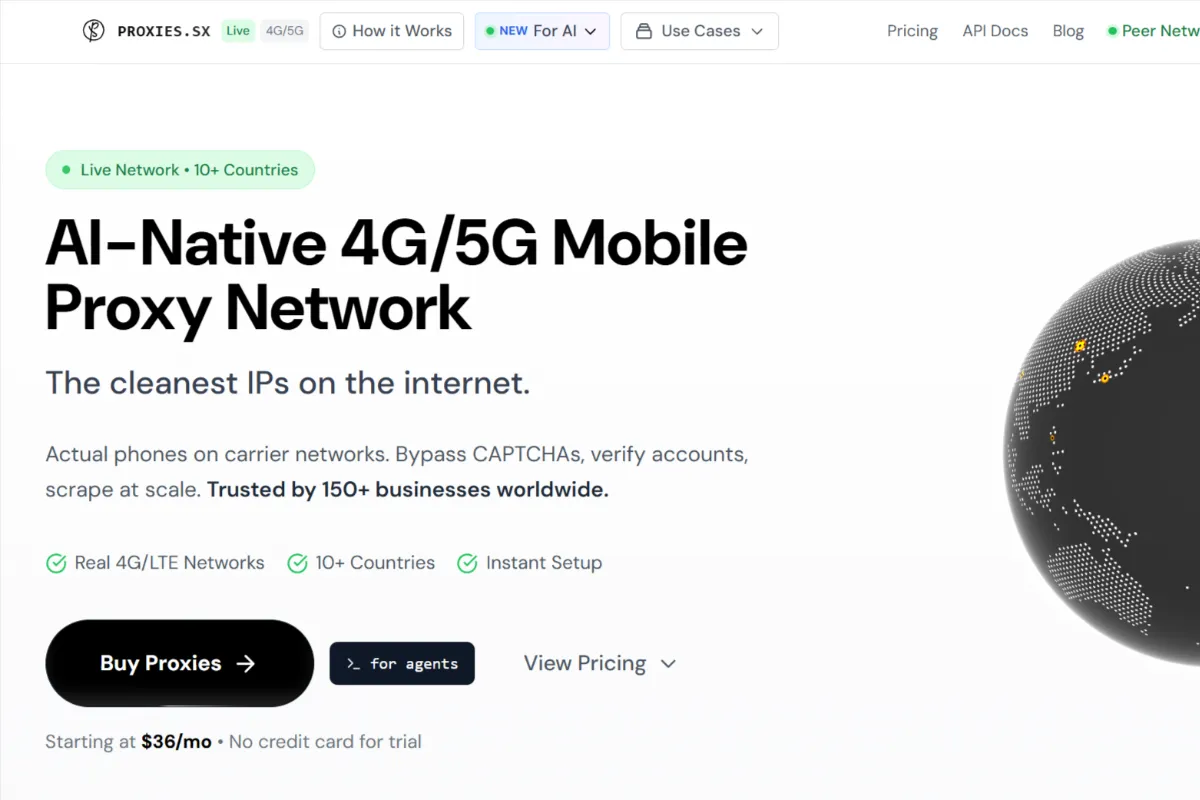
For scraping operations specifically targeting Amazon’s most protected page types, Proxies.sx stands out for its real 4G/5G mobile connections across 17+ countries with carrier-grade NAT IPs. Their focus on mobile infrastructure means their pool is optimized for the use case where trust level matters most.
- Mobile proxy pool: Real 4G/5G connections, 17+ countries
- Rotation: IP rotation on each request or timed rotation (configurable)
- Pricing: From $4/GB with a free 1GB trial
- Standout feature: CGNAT IPs from real mobile carriers — the highest trust tier for Amazon’s bot detection system
- Best for: Sellers monitoring competitor seller info and review data where mobile trust is essential
5. ScraperAPI — Best Managed Solution
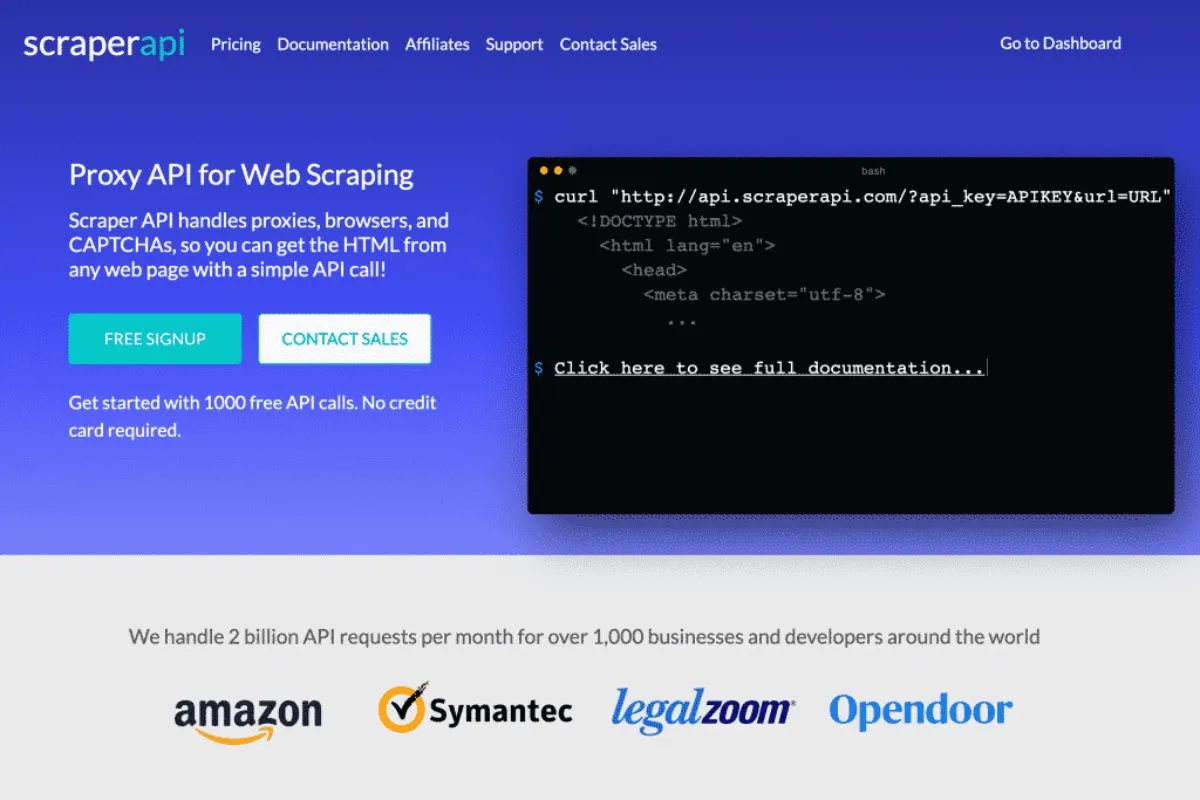
ScraperAPI is not a traditional proxy provider — it is a fully managed scraping API that handles proxy rotation, CAPTCHA solving, browser rendering, and retry logic for you. You send a URL; you get back clean HTML. For teams that want to skip proxy infrastructure management entirely, this is the path of least resistance.
- Approach: Managed API — no proxy configuration required
- Amazon support: Dedicated Amazon scraping endpoints with automatic retries
- Pricing: Free plan (1,000 API credits/month); paid plans from $49/month for 100K credits
- Standout feature: Structured data endpoints return clean JSON for Amazon product and search pages without you writing any parsing logic
- Best for: Developers who need Amazon data quickly without investing in proxy infrastructure or scraper maintenance
The Real Cost Per Successful Request: Math Competitors Don’t Show You
Every proxy provider comparison you’ll find online compares price per gigabyte or price per request. None of them factor in the failure rate — which is the only number that actually matters when you’re budgeting a scraping operation.
Here’s the math that makes the right proxy choice obvious:
| Proxy Type | Cost / GB | Success Rate | Requests / GB | Effective Cost / Success |
| Datacenter | $1.00 | 15% | ~3,000 | $2.22 per 100 clean responses |
| Residential | $10.00 | 55% | ~3,000 | $0.61 per 100 clean responses |
| ISP/Static | $15.00 | 65% | ~3,000 | $0.77 per 100 clean responses |
| Mobile 4G/5G | $8.00 | 88% | ~3,000 | $0.30 per 100 clean responses |
Reading the table: Datacenter proxies appear cheapest at $1/GB — but with only a 15% success rate, you’re paying $2.22 for every 100 clean, usable Amazon responses. Mobile proxies cost $8/GB but deliver those same 100 responses for $0.30 — nearly 7x cheaper on a per-result basis.
This is the calculation that should drive your proxy decision — not the headline per-GB rate.
Session & Cookie Management: What to Do Alongside Your Proxy
A high-quality proxy gets you through Amazon’s first line of defense. But to maintain consistent, high success rates at scale, your proxy needs to work alongside proper session and cookie management. Here’s what that looks like in practice:
Rotating Sessions vs. Sticky Sessions
Rotating sessions assign a new IP to every single request. This is ideal for broad catalog scraping where you’re hitting many different product pages and don’t need to maintain state between requests. It minimizes the risk of any single IP being rate-limited.
Sticky sessions maintain the same IP for a configurable duration (typically 1–30 minutes depending on the provider). Use sticky sessions when you need to:
- Navigate Amazon’s multi-page search results in sequence
- Maintain a simulated shopping session across product and review pages
- Follow referral chains or sponsored product links that Amazon validates by session
Request Pacing and Human-Like Timing
Amazon’s behavioral analysis system looks at the timing between requests as a key signal. A scraper that fires a new request every 500ms will be flagged quickly regardless of proxy quality. Implement randomized delays using a distribution that mirrors human browsing behavior:
- Between page loads: 3–8 seconds randomized delay (not uniform)
- Before clicking elements: 0.5–2 second delay
- After form interactions: 2–4 second pause
- Between search result pages: 5–12 seconds (humans read results)
TLS Fingerprint Spoofing and Browser Headers
If you’re using Python’s requests library or a similar HTTP client, Amazon’s TLS fingerprinting will identify you as a non-browser client regardless of proxy quality. The solutions:
- Use Playwright or Puppeteer — headless browsers send genuine browser TLS fingerprints and execute JavaScript, making them nearly indistinguishable from real users
- Use curl-impersonate — a modified curl build that mimics the TLS fingerprint of specific Chrome or Firefox versions, useful for high-performance scraping without full browser overhead
- Set complete browser headers — always include User-Agent, Accept-Language, Accept-Encoding, Sec-Fetch-* headers, and Referer to pass header-based detection
- Rotate User-Agent strings — maintain a pool of current, real browser UA strings and rotate them alongside your IPs
How to Choose the Right Proxy for Your Amazon Use Case

Use this decision guide based on what you’re actually trying to scrape:
| Price monitoring at scale (10K+ products) Use rotating residential or mobile proxies. Mobile proxies justify the cost at high volumes due to failure rate economics. Pair with sticky sessions only for paginated price history. |
| Competitor seller monitoring Use mobile proxies exclusively. Seller Info pages have the most aggressive bot protection on Amazon (10% success with datacenter vs. 85% with mobile). The cost premium is unavoidable. |
| Review scraping for sentiment analysis Use mobile or high-quality residential proxies with sticky sessions. Review pages are moderately protected, but scraping them in bulk without session management triggers rate limiting quickly. |
| Quick one-off data collection (<1,000 requests) Use ScraperAPI’s managed solution. The infrastructure overhead of setting up rotating proxies doesn’t make sense for small, infrequent jobs. ScraperAPI’s free tier covers it. |
| Amazon account management and automation Use ISP/static residential proxies. The consistency of a fixed IP is critical for account-based operations. Rotating proxies will trigger Amazon’s account protection systems. |
Frequently Asked Questions
Can I use free proxies to scrape Amazon?
Not reliably. Free proxy lists — whether from GitHub repositories, web forums, or free proxy aggregators — consist almost entirely of datacenter IPs that Amazon has already flagged. Even on a good day, you might see a 5–10% success rate before the IPs are fully burned. More critically, free proxies are shared with unknown parties, create significant security risks for your scraping infrastructure, and often inject malicious content into responses. For anything beyond basic experimentation, free proxies are not a viable tool for Amazon scraping.
Is scraping Amazon legal?
This is a genuinely complex question that varies by jurisdiction. Amazon’s Terms of Service prohibit automated data collection, and the platform actively enforces this through technical means. However, scraping publicly available data (prices, product descriptions, reviews) has been the subject of significant legal debate. The hiQ v. LinkedIn ruling and related cases have generally supported the legality of scraping publicly accessible data in the United States, though the legal landscape continues to evolve. For any commercial application, consult legal counsel familiar with data law in your jurisdiction. This article does not constitute legal advice.
How many requests per second can I safely send to Amazon?
There is no universal safe rate — Amazon’s thresholds are dynamic and vary by IP reputation, page type, and time of day. As a general starting point: no more than 1 request per 3–5 seconds per IP for product pages, and 1 request per 8–12 seconds per IP for seller and review pages. The practical answer is to implement exponential backoff when you detect 429 or 503 responses and treat those signals as Amazon’s real-time throttle feedback. With mobile proxies and proper session management, higher rates are possible — but the right approach is to monitor your success rate in real time and dial back before you trigger hard blocks.
Do I need a rotating proxy or a static proxy for Amazon?
It depends on your task. For catalog scraping and price monitoring at scale, rotating proxies are essential — you need a fresh IP for each request or each session to avoid burning individual IPs. For seller account monitoring, competitive analysis that requires maintaining a shopping session, or tracking a small set of specific ASINs over time, static residential (ISP) proxies are more appropriate. Many operations benefit from a hybrid approach: rotating mobile proxies for broad scraping, static residential proxies for session-sensitive tasks.
Conclusion
Amazon’s anti-bot system in 2026 is not a problem you can solve with a clever scraper alone. The proxy layer is foundational — it determines your trust level before your request is even evaluated.
For most Amazon scraping use cases, the decision comes down to this: mobile proxies deliver the highest success rates and the lowest effective cost per clean response when you account for failure rates. Residential proxies are a reasonable middle ground for lower-volume operations. Datacenter proxies are not a practical option for Amazon regardless of price.
Pair your proxy choice with proper session management — sticky vs. rotating sessions matched to your use case, human-like request pacing, and real browser TLS fingerprints — and you have a scraping stack that can run at scale without constantly fighting Amazon’s detection systems. The providers covered in this guide — Bright Data, Oxylabs, Smartproxy, Proxies.sx, and ScraperAPI — each occupy a specific position in the market. Match the provider to your scale, budget, and technical requirements rather than chasing the lowest headline price per gigabyte.