

Residential proxies have become essential for scraping, SEO tracking, ad verification, and geo-based testing—but they’re also known for being expensive. That’s why so many people search for the cheapest residential proxies: options that keep costs low without completely sacrificing reliability, IP quality, or safety.
- What Are Residential Proxies?
- Why Cheapest Residential Proxies Exist
- Who Should Use Cheap Residential Proxies?
- Top 5 Cheapest Residential Proxy Providers (Mini Reviews)
- Smartproxy – Affordable Entry-Level Residential Network
- SOAX – Flexible, Scalable Budget Residential Proxies
- IPRoyal Pawns – Ultra-Budget Residential Proxies with Large Pool
- PacketStream – Peer-Powered, Flexible, and Budget-Friendly
- Webshare Residential – Cost-Focused Network for Testing & SEO
- How Residential Proxy Pricing Works
- Types of Cheap Residential Proxies
- Cheap vs Premium Residential Proxies
- Geo Availability and Regional Pricing Differences
- How to Choose the Cheapest Residential Proxies for Your Use Case
- Common Risks and Mistakes with Cheap Residential Proxies
- Are Cheap Residential Proxies Legal?
- Alternatives to Cheap Residential Proxies
- Best Practices for Using Low-Cost Residential Proxies
- Conclusion
- FAQs
- Are cheap residential proxies worth it?
- What is the cheapest residential proxy available?
- Do cheap residential proxies get blocked more often?
- Are residential proxies legal to use?
- How much data do I need for residential proxies?
- Cheap residential proxies vs datacenter proxies—what’s better?
- Can cheap residential proxies be used for Google SERP tracking?
This guide breaks down what cheap residential proxies really are, why they exist, when they’re worth using, and when they’re a bad idea. You’ll learn how pricing works, what trade-offs to expect, and how to choose low-cost residential proxies that actually fit your use case instead of wasting money.
What Are Residential Proxies?
Residential proxies are proxy servers that route your internet traffic through real IP addresses assigned by Internet Service Providers (ISPs) to households. To websites, this traffic looks like it’s coming from a normal user rather than a server or data center.
Because residential IP addresses are trusted by most sites, they’re much harder to detect and block than datacenter proxies. That’s why they’re widely used for web scraping, SERP tracking, sneaker copping, ad verification, and geo-targeted research.
Cheap residential proxies use the same basic concept—but usually with compromises in IP sourcing, pool size, speed, or consistency.
Why Cheapest Residential Proxies Exist

Residential proxies are expensive because IPs are scarce, regulated, and costly to source. So how can some providers offer them cheaply?
Low-cost residential proxies usually exist because of one or more of these factors:
- Peer-to-peer (P2P) IP sourcing instead of direct ISP partnerships
- Smaller or less consistent proxy pools
- Limited geo-targeting precision
- Shared IP usage among many users
- Minimal customer support or tooling
In short, cheaper pricing reflects lower operational costs—but also higher risk in certain scenarios.
Who Should Use Cheap Residential Proxies?
Cheap residential proxies are not for everyone. They work best for users who understand their limitations.
They’re a good fit if you are:
- An SEO freelancer checking SERPs across regions
- A marketer testing ads or landing pages in different countries
- A beginner experimenting with web scraping
- A startup validating ideas before scaling
- A researcher or student working with non-sensitive data
They’re usually a poor fit if you need:
- High-volume scraping at scale
- Consistent login sessions for accounts
- Near-zero ban rates
- Enterprise-level uptime and support
- Compliance-heavy or sensitive data handling
Top 5 Cheapest Residential Proxy Providers (Mini Reviews)
Cheapest residential proxies can unlock powerful capabilities for SEO, scraping, and geo-testing without massive budgets. The key is understanding where cheap options shine — and where they fall short. By choosing the right provider and matching it to your specific task, you get the best mix of performance and cost.
Smartproxy – Affordable Entry-Level Residential Network
Smartproxy consistently appears among the most cost-effective residential proxy options — especially for users balancing price with quality. What sets Smartproxy apart is its flexible pricing structure: you can start with a small data package on a pay-as-you-go basis or choose a monthly plan that brings the cost per GB down as your usage increases.
Smartproxy sources its residential IPs directly from ISP partners and a large global proxy pool, which means greater reliability compared to many ultra-budget alternatives.
For beginners and intermediate users, this translates into lower block rates and better session stability. Whether you’re conducting SERP tracking, ad verification, or light scraping, the Smartproxy network tends to deliver steady performance without breaking the bank.
The provider also supports both rotating and sticky sessions, so you get more control over how long you keep a particular IP — a useful feature if your tasks involve login sessions or multi-step interactions.
Customer support and documentation are solid, which is helpful if you’re new to residential proxies. Smartproxy also integrates easily with popular scraping frameworks and SEO tools.
One drawback at the lowest price tiers is that geo-targeting can be limited to country-level rather than city-level precision. Still, for most global users looking for budget residential proxies that actually work, Smartproxy strikes a compelling balance between price, performance, and usability.
SOAX – Flexible, Scalable Budget Residential Proxies
SOAX is another popular choice for those hunting down cheap residential proxies with a high degree of flexibility. Its pricing model revolves around modular credit packs, which means you only pay for the bandwidth you intend to use — and smaller packs make it possible to get started with minimal upfront cost.
Like Smartproxy, SOAX maintains a large global pool of ISP-issued IPs, covering major markets such as the US, UK, and EU, which helps keep prices competitive while delivering real residential performance.
One of SOAX’s strengths is its clean, intuitive dashboard, which simplifies proxy management even for novices. You can configure rotating or sticky sessions, filter IPs by country or ASN, and track usage in real time. The provider also supports SOCKS5 and HTTP protocols, making it compatible with a broad array of SEO tools, browsers, and scraping libraries.
Where SOAX differentiates itself is in its geographic breadth and transparency: IPs are sourced from clearly disclosed regions, and the company highlights ethical sourcing practices. That said, this transparency sometimes means slightly higher per-GB costs in certain regions compared to the absolute cheapest P2P-style options. However, in exchange, you get better consistency and fewer disruptions.
For mixed audiences — from hobbyists to small agencies — SOAX delivers a cost-conscious yet reliable residential proxy service that avoids some of the pitfalls of no-name budget networks. If your tasks require occasional geo-targeted checks or multi-region tests without enterprise pricing, SOAX is worth considering.
IPRoyal Pawns – Ultra-Budget Residential Proxies with Large Pool
IPRoyal Pawns is a standout option if your primary objective is lowest possible cost. It’s frequently cited on forums and discussions as one of the most affordable residential proxy sources, thanks to its peer-to-peer (P2P) IP network. This model leverages opt-in residential IPs from real users, letting IPRoyal offer bandwidth at prices that undercut many traditional ISP-sourced providers.
With Pawns, the emphasis is on price and scale. You can often find plans that come in below $1 per GB, which is attractive for experiments, small scraping tasks, and lightweight geo-tests. The network covers a wide range of regions, and SOCKS5/HTTP support ensures broad compatibility with popular tools.
However, the low price comes with some trade-offs. Because the IP pool is sourced via P2P, performance consistency can vary: some sessions may be slower, and IP stability can be less predictable than with ISP-sourced networks. Ban rates may also trend higher, especially on sites with aggressive bot detection.
For these reasons, IPRoyal Pawns is best suited for non-critical, low-risk tasks where you’re testing concepts or performing one-off jobs.
Despite these limitations, IPRoyal Pawns fills a niche: if budget is your chief constraint and you’re willing to manage variability, it’s extremely hard to beat on price alone. For users scaling up later, the provider also offers larger packages and options to upgrade as needs evolve.
PacketStream – Peer-Powered, Flexible, and Budget-Friendly
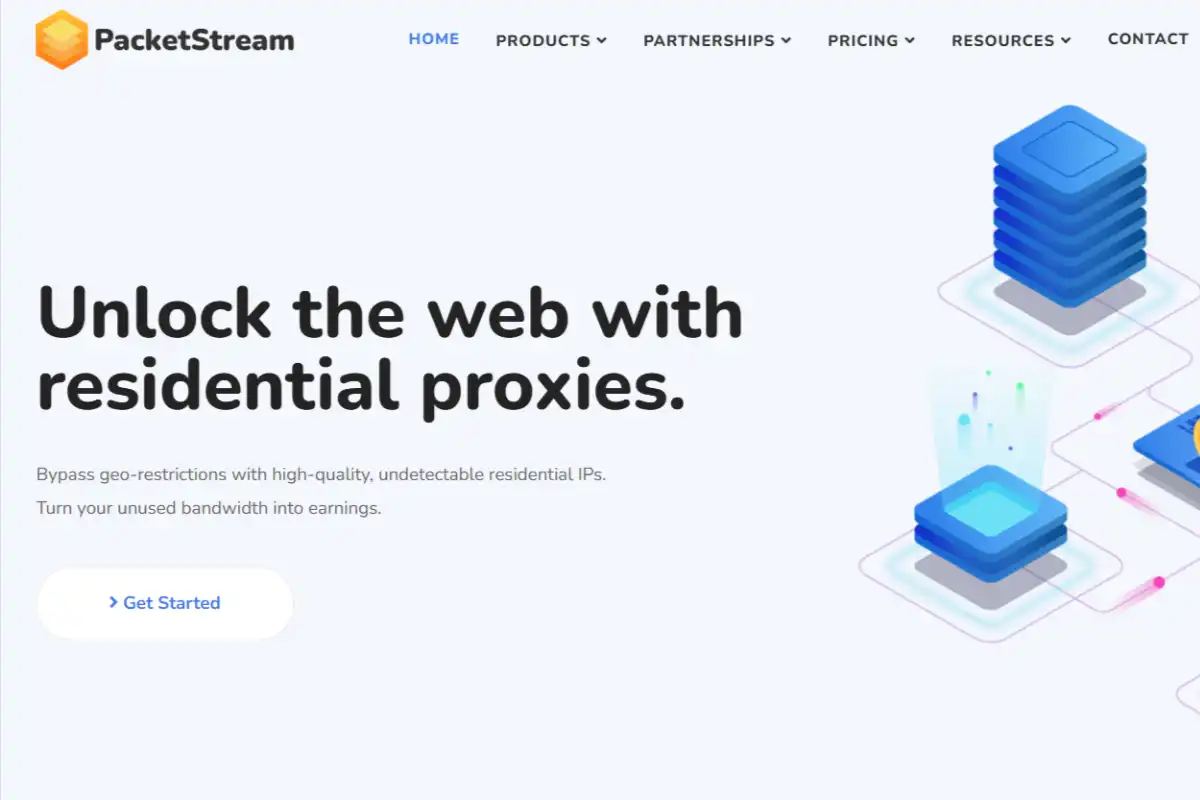
PacketStream takes the P2P concept and packages it in a very user-friendly way, making it a go-to choice for those who want cheap residential proxies without complex setup.
At its core, PacketStream operates on a marketplace model: users share unused residential IP bandwidth in exchange for credits, and buyers spend those credits on proxy usage. This mechanism keeps costs low and allows buyers to start with modest budgets.
One of PacketStream’s advantages is its simplicity. The platform provides straightforward proxy credentials and a global proxy pool that works well with scraping scripts, SEO tools, and testing frameworks. If you’re conducting tasks like localized SERP checks or basic site testing from multiple countries, PacketStream gets the job done without hefty monthly bills.
However, the ease of use comes with typical P2P trade-offs. Since the IP pool depends on peer participation, session reliability can fluctuate, and IP rotation is less predictable than ISP-backed services.
Geo-targeting is generally available at a broad country level rather than city-specific granularity. In addition, because bandwith comes from shared sources, performance and speed may dip during peak times.
Despite these limitations, PacketStream stands out as a budget-conscious, beginner-friendly residential proxy solution. It’s especially suitable for users who need a straightforward setup and flexible pricing rather than enterprise-grade guarantees.
For basic scraping, SEO monitoring, and geo-testing on a shoestring budget, PacketStream frequently delivers more value than many ultra-cheap alternatives.
Webshare Residential – Cost-Focused Network for Testing & SEO
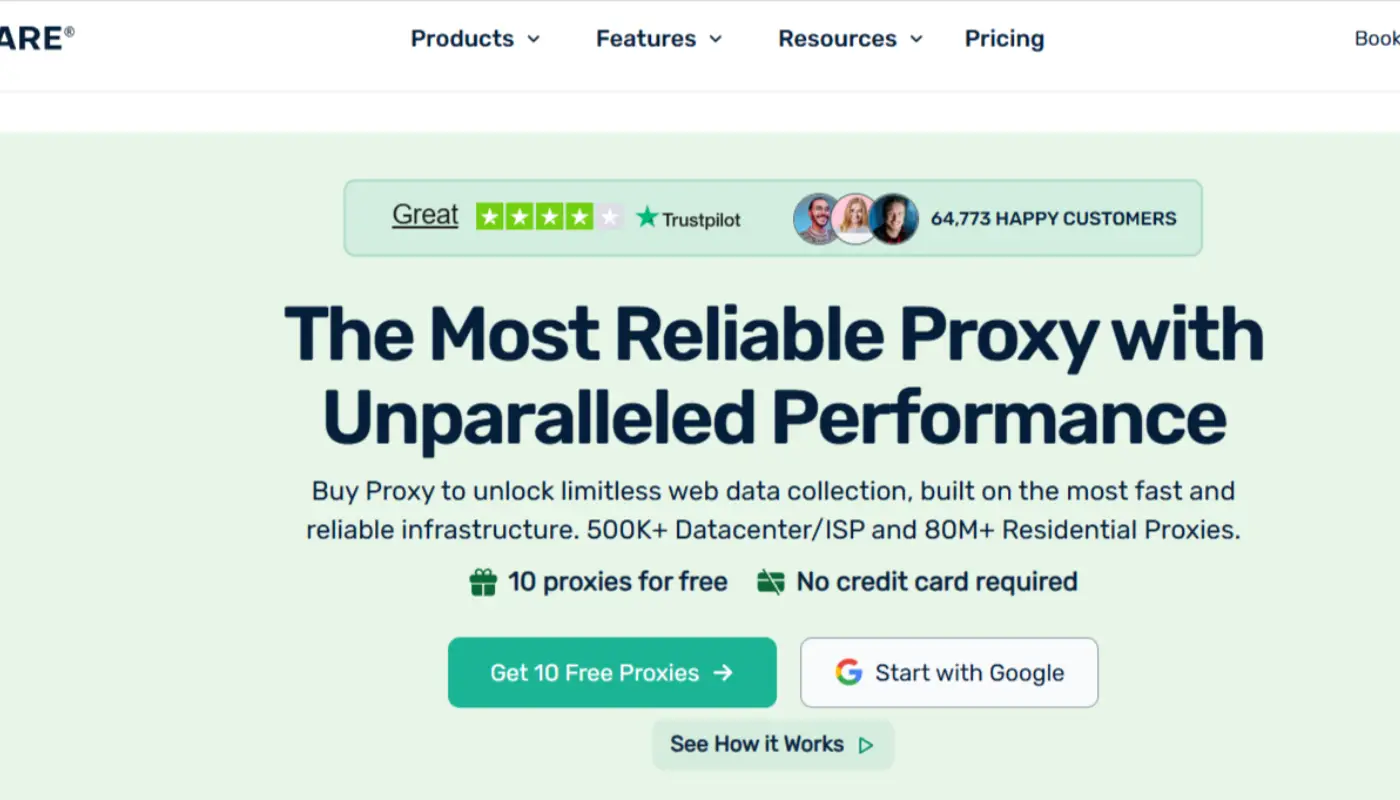
Webshare Residential is designed with price-sensitive users in mind, offering competitively low pricing tiers and straightforward packages that make it easy to get started.
The network combines ISP-sourced and third-party residential IPs to provide a global footprint that works well for common tasks such as SEO rank tracking, simple scraping, and localized checks.
One highlight of Webshare is its transparent bandwith pricing. Rather than locking you into large blocks, Webshare allows you to pick smaller data allotments, which helps control costs if your monthly needs are modest. The dashboard is clean and responsive, and it offers convenient features like session control and proxy filtering by country.
Performance with Webshare Residential is generally consistent for the price level, and the provider supports both SOCKS5 and HTTP proxies.
While not as robust as premium networks in terms of IP reputation or advanced geo-targeting, Webshare fills a sweet spot for users who want cheap residential proxies that “just work” without too much configuration overhead.
Webshare’s main limitations are the typical trade-offs: IP pools are smaller than enterprise services, rotation can feel more random, and high-security sites may challenge certain sessions.
But for most mixed users — from marketers to small dev teams — Webshare delivers budget-friendly reliability that outperforms many other low-cost alternatives.
How Residential Proxy Pricing Works
Residential proxy pricing is usually based on bandwidth usage rather than time.
Common Pricing Models
Pay-as-you-go
You buy a certain amount of data (GB) and use it at your own pace. This is common for cheap residential proxies and good for testing.
Monthly plans
You pay a fixed fee for a set amount of bandwidth each month. These plans are often cheaper per GB but less flexible.
P2P marketplace pricing
Some of the cheapest residential proxies come from peer-to-peer networks, where prices can drop below $1 per GB but quality varies significantly.
Typical Cost Ranges
- Budget residential proxies: ~$0.80–$3 per GB
- Mid-range providers: ~$3–$6 per GB
- Premium enterprise networks: $8+ per GB
Lower cost almost always means higher variability in speed, IP reputation, and success rate.
Types of Cheap Residential Proxies
Rotating Residential Proxies
Rotating proxies assign a new IP address on every request or after a short session.
Pros
- Cheapest option
- Ideal for scraping and crawling
- Harder to track at scale
Cons
- Unstable sessions
- Higher failure rates
- Not ideal for logins
Static Residential Proxies
Static residential proxies keep the same residential IP for longer periods.
Pros
- Better for account management
- More predictable behavior
- Lower CAPTCHA frequency
Cons
- More expensive
- Limited availability in cheap plans
Peer-to-Peer Residential Proxies
P2P proxies source IPs from real user devices that opt into proxy-sharing apps.
Pros
- Often the cheapest residential proxies available
- Large global pools
Cons
- Ethical concerns
- Inconsistent performance
- IPs may go offline unexpectedly
Cheap vs Premium Residential Proxies
The main difference isn’t whether they “work,” but how reliably they work.
| Feature | Cheap Residential Proxies | Premium Residential Proxies |
|---|---|---|
| Cost per GB | Very low | High |
| IP reputation | Mixed | High |
| Geo precision | Country-level | City/ASN-level |
| Speed consistency | Variable | Stable |
| Support | Limited | Dedicated |
| Best for | Light tasks | Mission-critical work |
Cheap proxies are best seen as tactical tools—not infrastructure you build everything on.
Geo Availability and Regional Pricing Differences
Not all residential IPs cost the same globally.
- US and Western Europe have the cheapest and largest proxy pools
- UK, Germany, France, and Canada are usually affordable and reliable
- Asia-Pacific, LATAM, Africa, and the Middle East tend to be more expensive and less consistent
If your use case only needs US or EU IPs, cheap residential proxies are much easier to justify.
How to Choose the Cheapest Residential Proxies for Your Use Case
Instead of asking “Which provider is cheapest?”, ask “What’s the cheapest option that works for what I need?”
Step-by-Step Decision Framework
- Define your task (scraping, SEO, ads, accounts)
- Estimate monthly bandwidth needs
- Decide whether rotating or static IPs are required
- Identify minimum geo requirements
- Start with a small pay-as-you-go plan
- Test success rate, bans, and speed
- Scale only if results are acceptable
This approach avoids paying more than necessary while reducing risk.
Common Risks and Mistakes with Cheap Residential Proxies
Many issues people face with cheap proxies come from unrealistic expectations.
Frequent Problems
- High block rates due to poor IP reputation
- Slow speeds during peak hours
- Inconsistent IP availability
- Over-rotation triggering anti-bot systems
- Violating website terms of service
How to Reduce Risk
- Throttle request rates
- Use proper headers and user agents
- Rotate sessions intelligently
- Avoid sensitive actions like payments or account recovery
- Separate proxies by task
Are Cheap Residential Proxies Legal?
Residential proxies themselves are generally legal in most countries. What matters is how you use them.
Problems arise when proxies are used for:
- Fraud
- Account abuse
- Circumventing paywalls
- Violating data protection laws
Responsible usage, compliance with local laws, and respecting website terms reduce legal and ethical risk.
Alternatives to Cheap Residential Proxies
If cheap residential proxies aren’t the right fit, consider these alternatives:
- Datacenter proxies for speed-focused tasks
- Mobile proxies for social media automation
- SERP APIs for structured search data
- VPNs for basic privacy (not scraping)
Each alternative trades trust, speed, cost, and scale differently.
Best Practices for Using Low-Cost Residential Proxies
- Match proxy type to task
- Keep request volumes realistic
- Monitor success and ban rates
- Avoid mixing proxy use cases
- Upgrade only when cheap options stop working
Cheap residential proxies work best as controlled tools, not all-purpose solutions.
Conclusion
The cheapest residential proxies can be a smart choice when used intentionally. They’re ideal for testing, research, SEO checks, and small-scale scraping where budget matters more than perfection.
The key is understanding the trade-offs: lower cost means higher variability, more risk, and fewer guarantees. By choosing providers carefully, matching proxies to the right tasks, and scaling responsibly, cheap residential proxies can deliver real value without unnecessary expense.
If you treat them as precision tools—not shortcuts—you’ll get far more out of every dollar spent.
FAQs
Are cheap residential proxies worth it?
Yes, for light scraping, SEO checks, and geo-testing. They’re not ideal for large-scale or sensitive tasks.
What is the cheapest residential proxy available?
Some P2P networks offer prices under $1 per GB, but quality and reliability vary widely.
Do cheap residential proxies get blocked more often?
Generally yes, especially if overused or poorly configured.
Are residential proxies legal to use?
In most regions, yes—but misuse or violating website terms can create legal issues.
How much data do I need for residential proxies?
SEO and testing tasks may need only 1–5 GB per month, while scraping can require much more.
Cheap residential proxies vs datacenter proxies—what’s better?
Residential proxies are harder to detect; datacenter proxies are faster and cheaper but easier to block.
Can cheap residential proxies be used for Google SERP tracking?
Yes, if request rates are low and IPs are rotated properly.